Storm & Emergency Damage
Emergency Storm Tree Removal in Reno & Sparks, NV
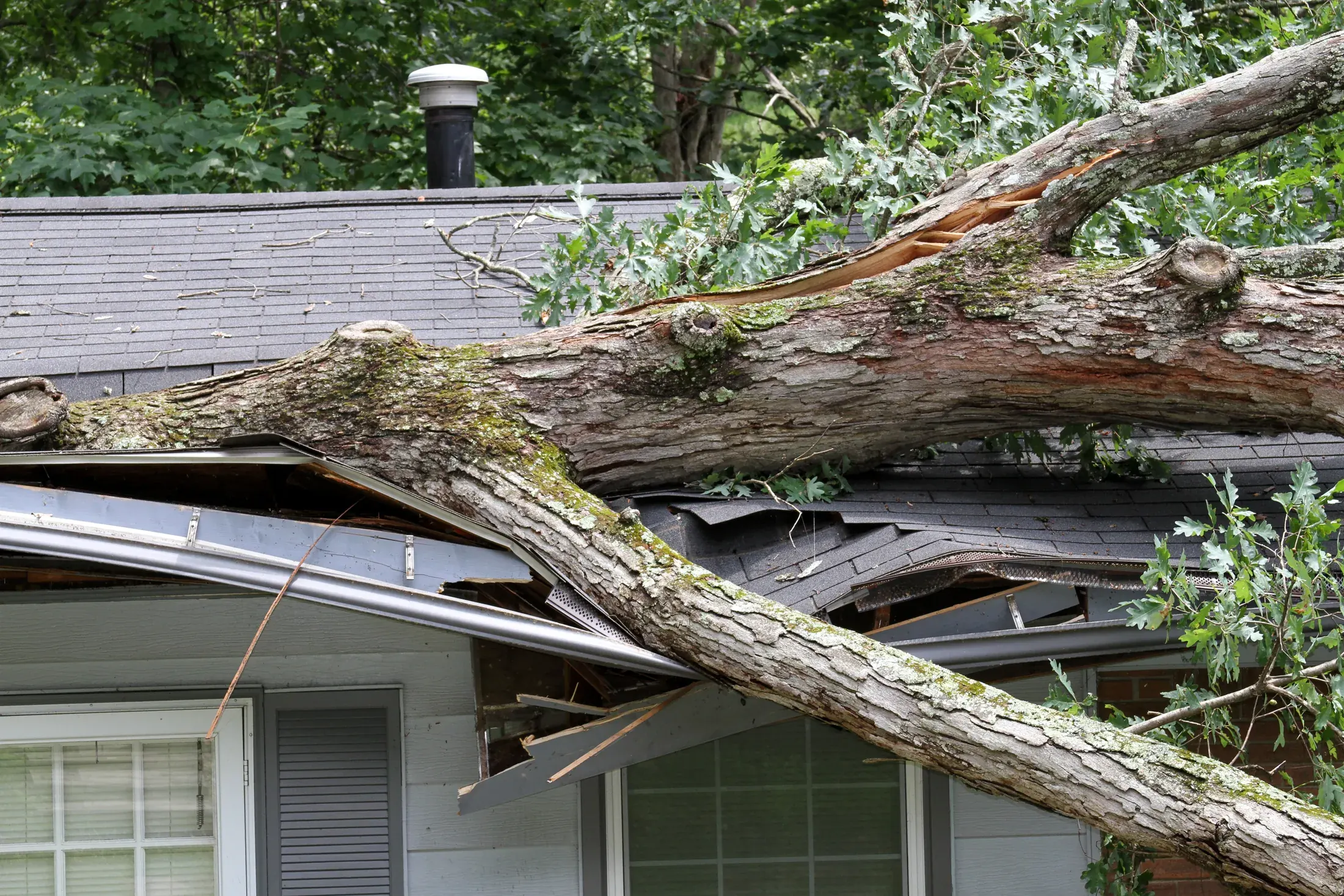
Tree down on your house, car, or yard? Get matched fast with an insured local pro who handles storm damage and hazardous trees.
Safety first
If a tree is on power lines, stay back and call your electric utility and 911 immediately — do not touch the tree or anything it's resting on. If a tree is on a structure with people inside, get everyone out safely before worrying about the tree itself.
Emergency or same-day tree removal typically costs 20–50% more than standard scheduled removal (which nationally averages around $850 per tree) as of September 2026, and crane or structure-entangled jobs can run 2–3x the standard price. Many pros also charge an emergency callout minimum of $250–$500.
We match you with an insured local tree pro — we don’t perform the work ourselves. We route storm and emergency jobs to a vetted, insured local pro as quickly as their schedule and the severity of area-wide damage allow.
Why Emergency Work Costs More
- After-hours and same-day scheduling — pulling a crew off a planned job or calling them in outside normal hours carries a labor premium.
- Higher risk — storm-damaged trees are often unstable, under tension, or tangled with structures or lines, requiring more careful (and more expensive) technique.
- Specialized equipment — a crane or bucket truck for a tree on a roof or across a driveway costs more to mobilize than a standard removal.
- Demand spikes — after a widespread storm, every local crew is booked, which pushes pricing and wait times up across the board.
What to Do Before a Pro Arrives
- Keep people and pets away from the tree, any hanging ("hung-up") limbs, and anything it's resting on.
- If it's touching power lines or a gas line, stay clear and call your utility and 911 first.
- Photograph the damage from a safe distance for your insurance claim before anything is moved.
- Don't attempt to cut or move a leaning or hung-up tree yourself — this is one of the most dangerous situations in tree work, even for experienced homeowners.
- Tell us what happened — a tree on a structure, a blocked driveway, a leaning hazard — so we can route you to a pro equipped for it.
Standard Removal Pricing, for Comparison
If your situation isn't urgent — a dead tree you want scheduled, not an active hazard — you may not need to pay the emergency premium. See our standard tree removal page for non-emergency pricing by tree height, which runs $400–$1,200 for most trees.
Avoiding Storm-Chasing Scams
Major storms attract out-of-town crews looking for quick cash jobs, some unlicensed and uninsured. Red flags include demanding full payment up front, no written estimate, no proof of insurance, and pressure to decide immediately. A legitimate pro can show proof of insurance and will give you a clear price before starting, even in an emergency.
Not Sure If It's an Emergency?
Treat it as urgent if a tree or large limb is on power lines, on or leaning into a structure, blocking your only access in or out, or visibly continuing to fail (fresh cracking sounds, active leaning). If damage happened but the tree or debris is stable, contained, and not touching anything live, it's reasonable to request a match without paying the emergency premium — tell us the situation honestly and we'll route you accordingly.
How Matching Works
- Tell us what happened and how urgent it is — on a structure, blocking access, or a standing hazard.
- We match you with an insured, independent local pro who handles storm/emergency work.
- The matched pro contacts you to assess the situation and quote the job, including any emergency premium.
How We Vet Every Matched Pro
Storms bring out opportunists as well as legitimate crews. Every pro we match you with carries verified insurance — no exceptions, even in a rush.
- Active general liability insurance — verified before we match you with a pro, not taken on their word.
- Real local coverage — matched pros actually service Reno and Sparks, not a call center routing to whoever's available nationally.
- Credentials noted where held — ISA certification or TCIA accreditation, when a pro carries them, factors into who we match you with. Nevada has no contractor-license classification specific to tree work, so this is a meaningful signal, not a formality.
- No obligation — getting matched and getting a quote doesn't commit you to hiring anyone.
Frequently Asked Questions
How much more does emergency tree removal cost?
A tree fell on power lines — what do I do first?
Will my homeowners insurance cover storm tree removal?
How fast can a matched pro respond after a storm?
What kind of storm damage is common in the Reno/Sparks area?
Should I get multiple quotes during an emergency?
What documentation does my insurance company need?
What if a neighbor’s tree fell onto my property?
Is my call recorded?
Need Emergency Tree Removal Now?
Tell us what happened — we'll match you with an insured local pro who handles storm work.