Tree Care Guide · Reno & Sparks
Trim It or Remove It? How Reno Homeowners Can Decide
As of September 2026, trimming a tree in the Reno/Sparks area typically runs $400–$900 per visit and removing one typically runs $400–$1,200 once, plus $120–$400 for the stump — so the right call is less about this year's bill than about whether the tree is healthy enough to keep paying for. If the problem is in the branches, trim. If it is in the trunk, the roots, or most of the canopy, removal is usually the honest answer.
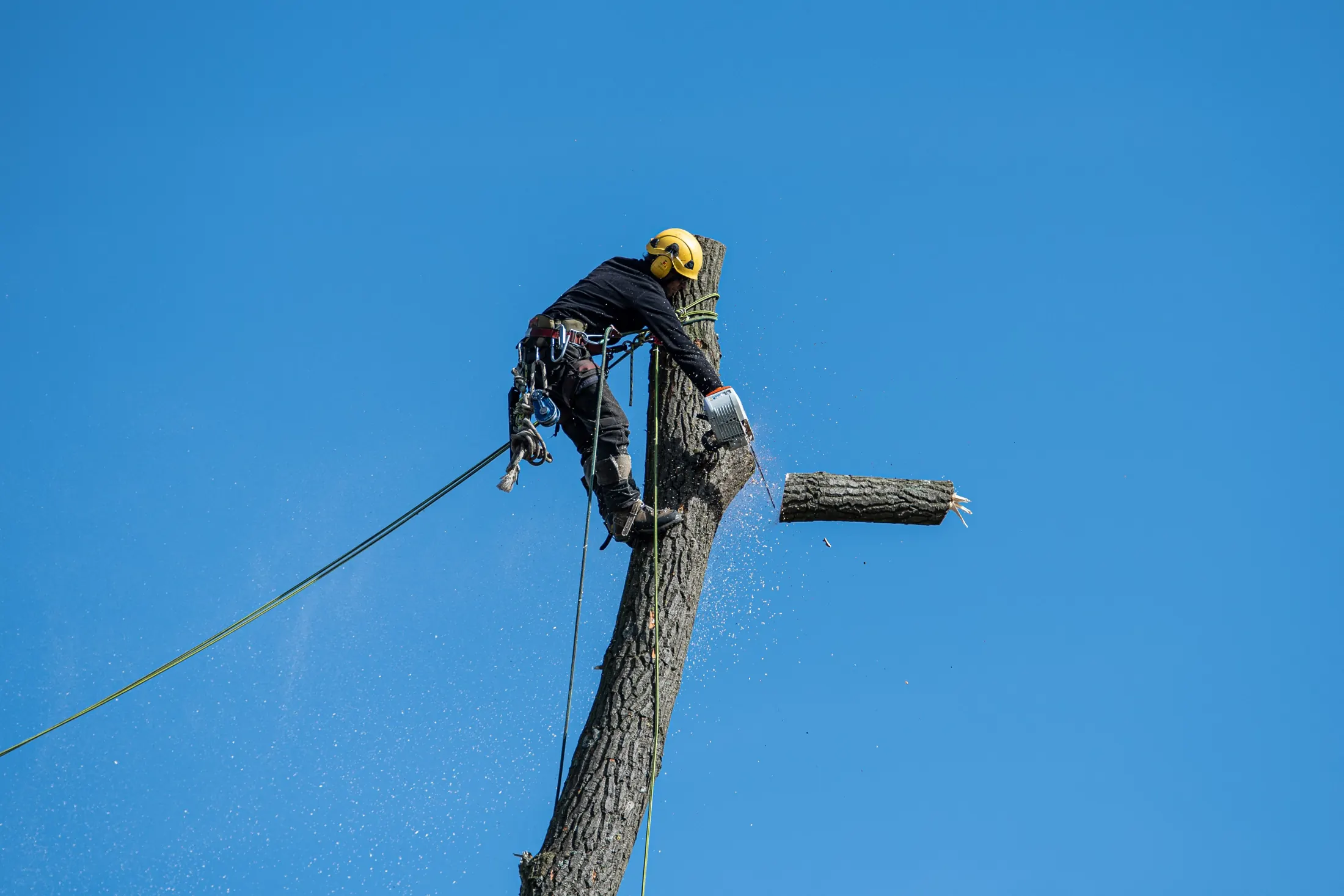
The Short Version
Trimming solves branch problems: limbs over the roof, a crown crowding the house, dead wood in an otherwise healthy tree, growth into a sightline or a neighbor's yard. Removal solves tree problems: a trunk that is cracked or hollow, roots that are failing, a tree that is mostly dead, or one standing where nothing should stand. Most calls a Reno tree service gets are clearly one or the other once someone looks at the base of the tree instead of the top of it. The hard cases are the ones in between, and that is what the rest of this page is for.
Signs It Just Needs Trimming
- Full, leafy canopy with a few dead limbs. One or two dead branches on an otherwise healthy tree are normal. They come off; the tree stays.
- Limbs over the roof, driveway, or a walkway. Overhang is a clearance problem, not a health problem. Crown reduction or raising the canopy handles it.
- Crown touching the house or another tree. The Reno-area defensible-space guidance this site covers elsewhere is built around spacing and clearance — pruning the crown back to roughly 10 feet from a structure, not removing the tree.
- Storm-snapped limbs with a sound trunk. A torn limb should come off right away for safety and to stop decay from entering the wound, but the tree itself is usually fine.
- Overgrown after years of neglect. A tree that has simply never been pruned is a bigger trimming job, not a removal.
Trimming is also the answer when the "problem" is really timing: a tree that looks rough in late summer heat may just be stressed, and dormant-season pruning is the right response. Our guide to pruning timing in Reno covers when to schedule it.
Signs It Probably Needs to Come Out
- Fungus, mushrooms, or shelf conks at the base. These are fruiting bodies of decay already inside the roots or lower trunk. No amount of trimming reaches it.
- A cracked, split, or hollow trunk. Large vertical cracks and cavities reduce the strength of the one part of the tree that holds everything else up.
- Dead wood across most of the canopy, or dieback from the top down. Top-down dieback usually means the root system can no longer supply the crown.
- A new or worsening lean, especially with soil cracking or lifting on the side opposite the lean — a sign the root plate is moving, not the tree growing at an angle.
- Peeling bark exposing dead, dry wood underneath over large areas of the trunk.
- The wrong tree in the wrong place. A healthy tree whose roots are heaving the foundation or sewer line, or that stands exactly where a project is going, is a removal for reasons that have nothing to do with its health.
When several of these show up on one tree, the question is rarely whether to remove it but how soon. See tree removal in Reno & Sparks for what the job involves and what to check before hiring.
The Target Matters More Than the Tree
A declining tree in the back corner of a large lot, with nothing under it, can often be left standing for years and monitored. The same tree ten feet from the house, over a parked car, or beside a power drop is a different decision entirely, because the cost of being wrong is a roof, a vehicle, or an injury rather than a cleanup. When you run the self-check below, the "what could it hit" step is the one most homeowners skip and the one a pro will ask about first. Anything touching or near a power line is a utility call, never a trimming or removal job for a tree service.
What Each Option Costs in Reno
These are the national benchmark figures this site uses everywhere, as of September 2026 — Reno-area jobs generally land inside the same ranges, with access, height, and proximity to structures pushing a quote toward the high end. Your matched pro confirms the actual number after seeing the tree.
| Job | Typical cost | How often |
|---|---|---|
| Tree trimming / pruning, per tree | $400–$900 (overall $80–$2,500+) | Recurring for the life of the tree |
| Trimming — Small tree (up to 30 ft) | $250–$700 | Recurring |
| Trimming — Medium tree (30–60 ft) | $600–$1,200 | Recurring |
| Trimming — Large tree (over 60 ft) | $1,000–$2,500+ | Recurring |
| Tree removal | $400–$1,200 (average $850) | Once |
| Removal — Small tree (under 30 ft) | $200–$500 | Once |
| Removal — Medium tree (30–60 ft) | $500–$1,500 | Once |
| Removal — Large tree (60–80 ft) | $850–$2,000 | Once |
| Removal — Extra-large tree (over 80 ft) | $1,200–$2,500+ | Once |
| Stump grinding, single stump | $120–$400 (about $2–$6 per inch of diameter) | Once, after removal |
| Minimum service call (either job) | $100–$300+ | Per visit |
The trap is comparing one trimming visit against one removal. A healthy medium tree trimmed at $600–$1,200 every few years is money well spent for decades of shade and value. A declining tree trimmed at the same price is money spent delaying a removal that is coming anyway — and removal of a dead tree is often harder and pricier than removal of a live one, because brittle wood is less predictable to rig and section. The full breakdowns are on the tree removal cost guide and the tree trimming page.
The Five-Minute Self-Check
Run this before you call anyone. It won't replace an in-person look, but it will tell you which page of this site to read next and make the conversation with a pro much shorter.
- Check whether the tree is alive. During the growing season, look for leaf cover across the whole canopy. Bend a few small twigs on different limbs: live wood bends and shows green under a scratched bit of bark, dead wood snaps cleanly and is dry and brown inside.
- Estimate how much of the canopy is dead. One dead limb on an otherwise full tree is a trimming job. Dead wood spread across most of the canopy, or dieback starting at the top and working down, points toward removal — have a pro confirm.
- Inspect the trunk and the base. Walk the full circle. Mushrooms or shelf fungus at the base, a vertical crack in the trunk, large hollows, peeling bark exposing dead wood, or soil lifting on one side of the trunk are structural signs that trimming cannot fix.
- Look at what the tree could hit. Note anything within reach of the tree if a limb or the whole tree failed: the house, a neighbor’s roof, a driveway, a fence, a play area, or power lines. A tree with a target changes the decision more than the tree’s own condition does.
- Run the cost math over several years. Compare one removal (typically $400–$1,200, plus $120–$400 if the stump is ground) against trimming that recurs for as long as the tree stands ($400–$900 per visit). A healthy tree is worth the recurring cost; a declining one usually is not.
Three Reno-Specific Wrinkles
- Defensible space. In the foothills and anywhere near the wildland-urban interface, a dead or dying tree close to the house is a fire-clearance issue as well as a hazard, which tends to push a borderline case toward removal. A healthy, well-spaced tree is usually a trimming case under the same guidance. See the defensible space guide.
- Property-line trees. If the trunk straddles a boundary, the decision is not yours alone — and Nevada has no dedicated statute on neighbor tree disputes, so the general principles in our property-line guide are the starting point before anyone cuts.
- Who you hire. Nevada has no contractor-license classification specific to tree work, so insurance is what to verify, not a license number — our hiring guide explains what to ask for. A pro who recommends removal of every tree they look at, or who won't explain why trimming wouldn't do, is a reason to get a second opinion.
When to Stop Deciding and Call
A tree with a cracked trunk, a fresh lean, or a storm-torn limb over a target is not a "watch it for a season" situation. Keep people and vehicles out from under it and start with the storm and emergency page. For everything else, describe what you found in the self-check and get matched with an insured local pro who can tell you — in person — whether the tree is worth keeping.
Frequently Asked Questions
Is it cheaper to trim a tree or remove it in Reno?
When does a tree have to be removed instead of trimmed?
Can a tree be trimmed instead of removed if it is too close to the house?
Does the season change whether I should trim or remove?
Who decides in the end?
Is my call recorded?
Not Sure Which One You Need? Get an Insured Local Pro's Opinion
We match you with an insured local tree pro — we don’t perform the work ourselves.